Ferrari Hypersail, 100 feet to challenge the oceans
 by
 Giorgio BrunoGiorgio Bruno is a professional who combines extensive expertise in strategic communications with hands-on experience in the yachting industry. With a strong business mindset rooted in top-level sailing expertise, his career spans strategic marketing and specialized publishing.

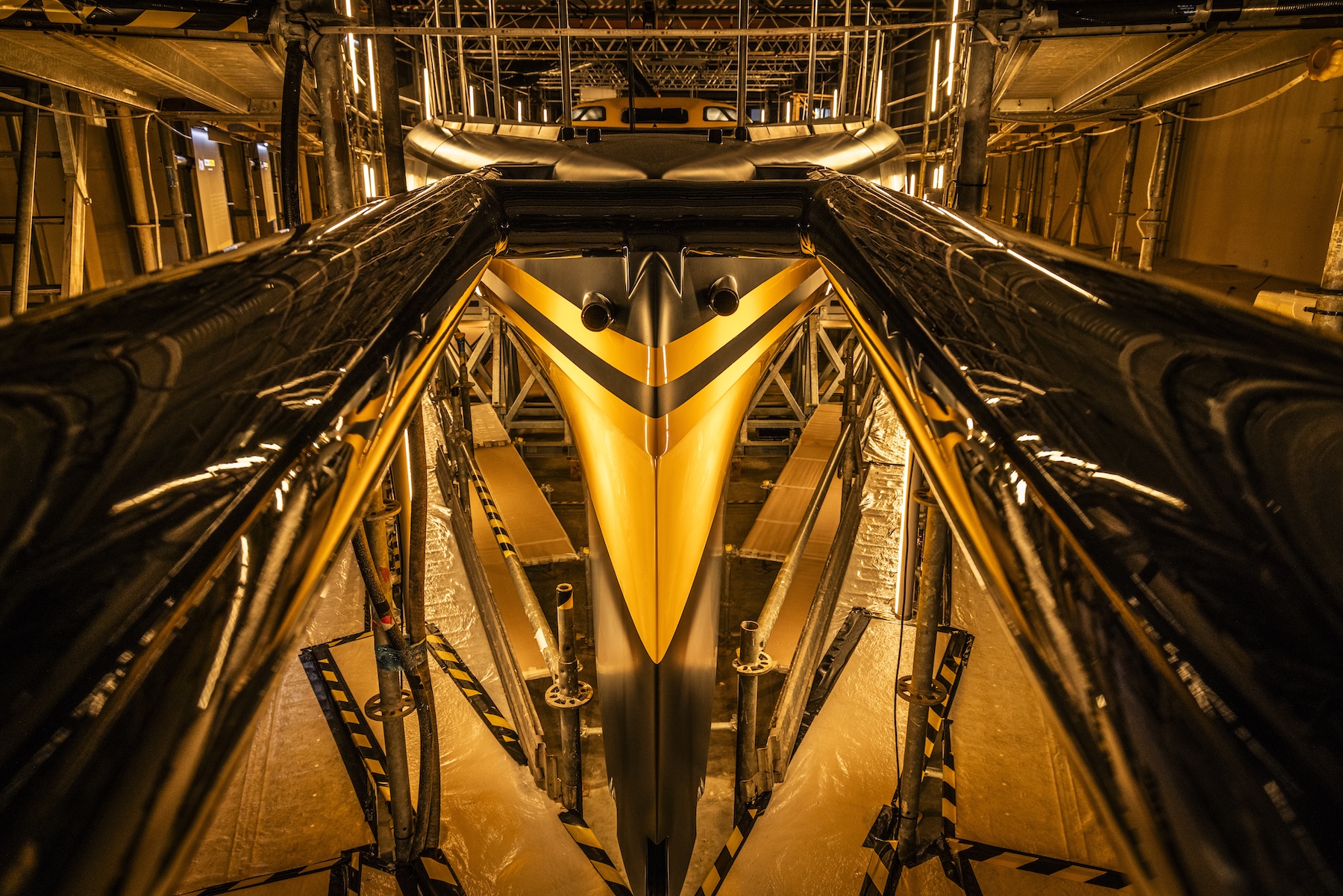
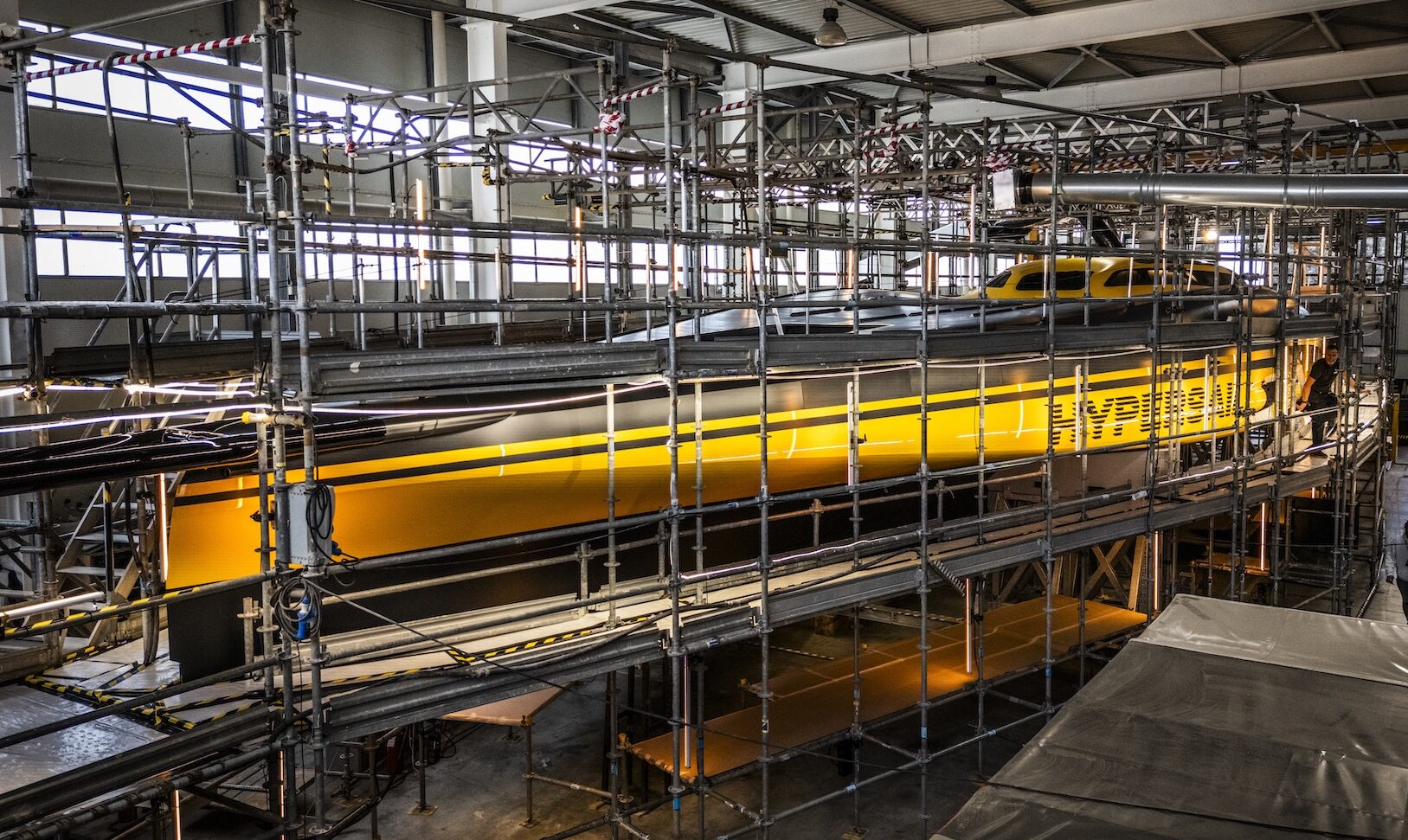
Ferrari Hypersail, the innovative 100-foot flying monohull, enters a new phase following painting and the application of its livery. Its technology that will allow Ferrari Hypersail to fly has been unveiled recently, the engineering of the foils, keel, and rudder will integrate with the innovative automated flight management system, the “flight control“.
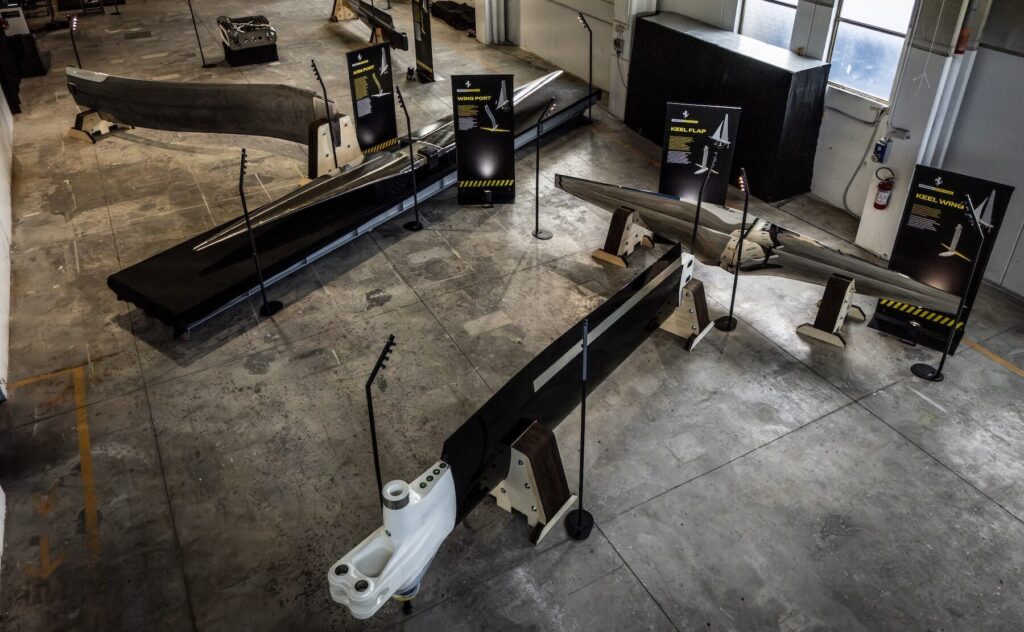
The appendages are the fundamental components that work beneath the water’s surface and through which the boat generates lift, manages balance and reacts to sea conditions. They are three distinct elements – foil, keel, and rudder – whose shape is designed to generate, modulate, and manage the necessary forces. Together they create essential support and control points to keep the boat stable and efficient.
- The foils (the lateral wings): generate the upward lift necessary to raise the hull above the water’s surface, reducing drag and enabling the vessel to reach the desired speed.
- The keel: features a distinctive technological innovation of the Ferrari Hypersail project. It indeed integrates a foil, which in turn has a movable part (flap). This solution contributes to flight management and creates a third support point, enhancing stability during navigation.
- The rudder: goes beyond the simple function of steering the boat. Equipped with a small movable flap on its vertical section, it actively contributes to navigation control through continuous micro-adjustments that allow the vessel to maintain its course.
Ferrari Hypersail, the “Flight Control”
The Flight Control electronic control system acts as the true operational center of Ferrari Hypersail, stemming from the transfer to the project of the Ferrari know-how developed in the field of electronic systems and dynamic control of sports cars.
The system automatically manages the boat’s trim during flight: continuously analyzes wind, waves, speed, and tilt to adjust the trim in real-time, ensuring stability and performance during navigation in flying mode. This architecture is structured in a three-stage sequence: a network of sensors distributed on the vessel that constantly measures the state of the sea and the movements of the hull; an onboard computer that analyzes the data and calculates the necessary corrections; some actuators – the arms and mechanical pistons that move the components – that adjust the tilt of the foils and appendages, balancing any variation in the vessel’s trim.
The choice to realize the project entirely within a Ferrari structure arises from the desire to apply the technological culture of Maranello to ocean sailing. An approach that has allowed the development on Hypersail of over 20 patents, including the Winch by Wire, extended range wind turbines, the MV/HV system for the integration of renewable sources, announced in July 2026 with the concept of energy self-sufficiency, which represent a concrete and tangible application. In addition, there are solutions for a pivoting mast equipped with wings, small surfaces similar to fins, and a double skin mainsail to improve control and management of the sails.
The crew nonetheless remains at the center of operating Ferrari Hypersail. The software technology is designed to handle tasks that can be optimized through control systems, allowing the sailors to devote more attention to interpreting sea conditions, strategic choices, and pursuing maximum performance.