'/%3E%3C/svg%3E)

Ouzel: timeless elegance, thoroughbred performance
 bySilvia AntonaWith more than a decade of experience in marine publishing, Silvia has turned her passion for the sea and writing into a successful career. Combining strong editorial expertise with in-depth technical knowledge of the yachting industry, she brings authority and value to every project she undertakes.
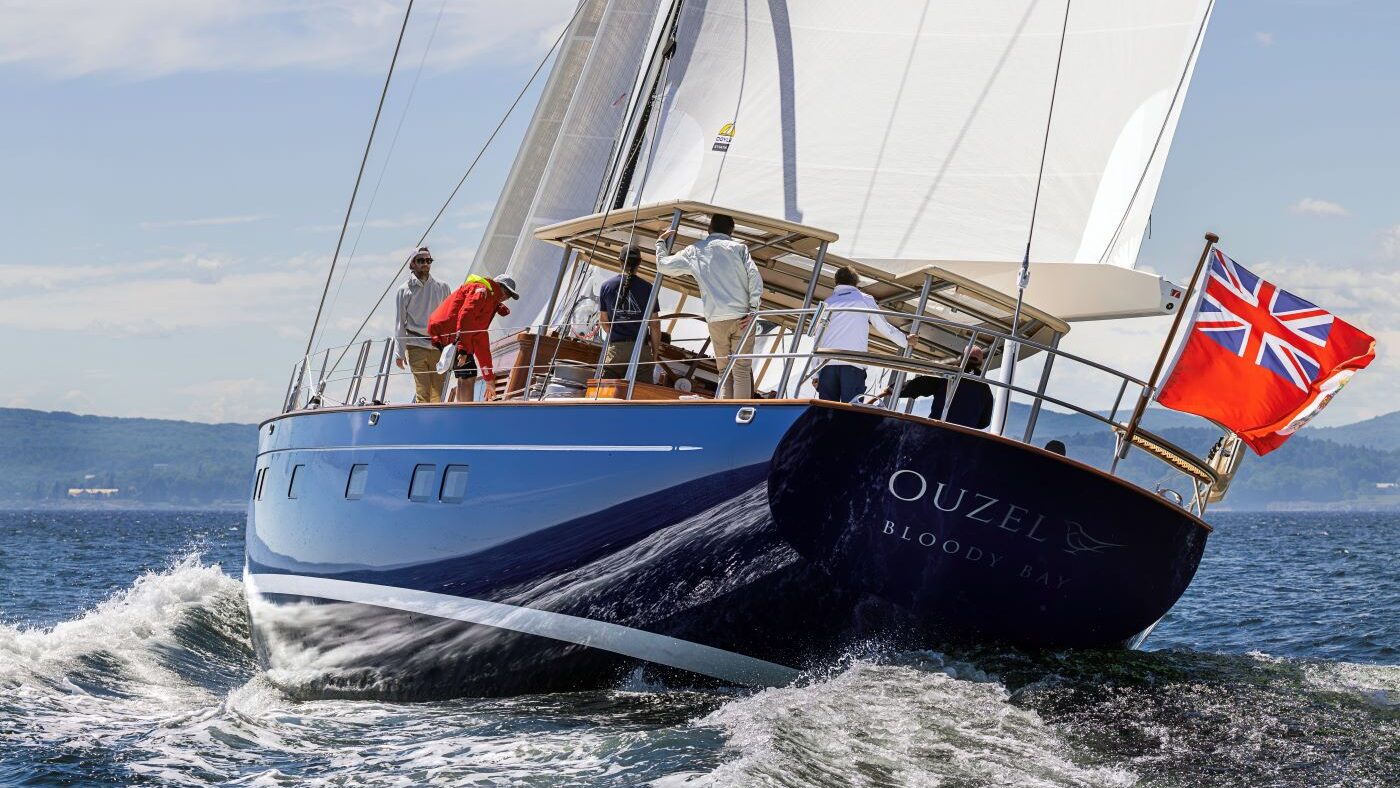
Ouzel: the sea trials confirm the quality of the project
The sail plan, developed with Doyle Sails and intentionally minimal — mainsail, Yankee, staysail, and Code Zero — has been designed to ensure efficiency and immediacy in every condition. Together with a deep keel and solutions like the Park Avenue boom, it defines a vessel capable of delivering real performance without compromising ease of handling.
It is therefore not surprising that during the sea trials in Penobscot Bay, Ouzel effortlessly exceeded 12 knots in moderate breezes, showing a surprising balance between power and control.
The designer Tom Degrémont, present on board, emphasized how the boat reacted exactly as the team expected: a feeling of power, immediate control, and an overall balance that fully reflected the work done during the design phase. In ideal conditions, the use of the Code Zero allowed for a quick crossing of the bay, confirming the performance goals set from the beginning.
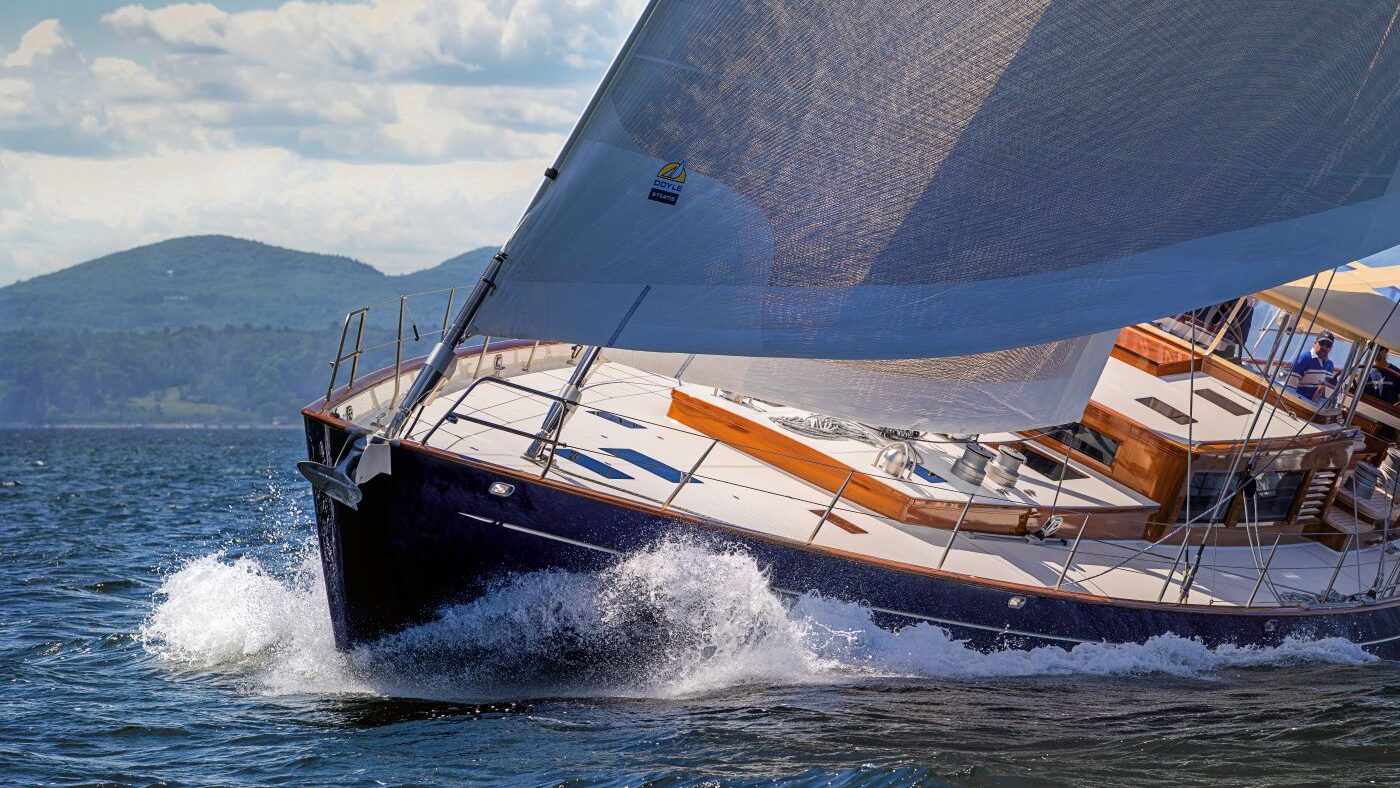
Also on the construction front, the assessment was equally positive. Peter Wilson of Marine Construction Management (MCM) described the launching of the sails as a highly significant moment after years of work, highlighting the quality of the team involved — from sailmakers to hydraulic technicians, from engineers to riggers — and defining the sea trial a success from every point of view. The boat showed a “easy and super responsive” helm response, with only a minimal list of finishing touches, as is normal at this stage.
A key element of the project has been the active role of the owner, involved as a true partner in all phases. Specifically, the owner opted for a configuration that allows for a greater draft to the benefit of performance, along with a blade jib designed to replace the Yankee and staysail during close-quarters maneuvers or in tight tacking.
Elegant and classic in form, Ouzel is not just a tribute to tradition, but a concrete evolution of it, designed to sail far, with speed, control, and a well-defined identity.